
Renewable Electricity Lowers your Carbon Footprint
Going 100% RENEWABLE for your electricity source is one of the easiest ways to decrease your carbon footprint.
So, you want to reduce your environmental impact, both at work and at home, but you aren’t sure where to start? There are hundreds of initiatives you could undertake. Some are easy; others are difficult. Some are inexpensive; others are costly. Some have a large impact; others only produce marginal gains. If you are just starting your sustainability journey, it would be ideal to start with an easy win that makes a significant impact.
In many counties and cities across the US and Canada, you can purchase electricity for your practice or home with 100% renewable low or zero carbon energy sources. (1) Depending on the region, there are various ways to source renewable energy. The easiest is when there is provision with utility providers or retail options. For your practice, contact your utility’s commercial representative. In many cases, the change for residential electricity can often be made in seconds by simply clicking an “Opt Up” or “Opt In” button and entering your details to make the transition. If your utility provider doesn’t offer renewable energy sources, there are third-party providers who ensure that the energy you use is replaced in the grid with low or zero-emission electricity.
The most environmentally sustainable and clean sources are solar and wind. However, in certain areas, geothermal, hydropower, and even biofuel may be reasonable alternatives to fossil fuels for electricity production. This action tackles Scope 2 emissions of the GHG protocol (2) without the expense and maintenance of installing your own solar array (which depending on your location may be cost prohibitive or impractical for other reasons). Costs for low carbon electricity are rapidly falling, and the cost differential compared to your current energy mix is narrowing, generally varying by 1-2C per kWh (less than $10 on your residential monthly bill). For instance, since 2010, the cost of solar utility-scale photovoltaics has dropped by more than 85%, and this is clearly shown in Figure 1.(3)
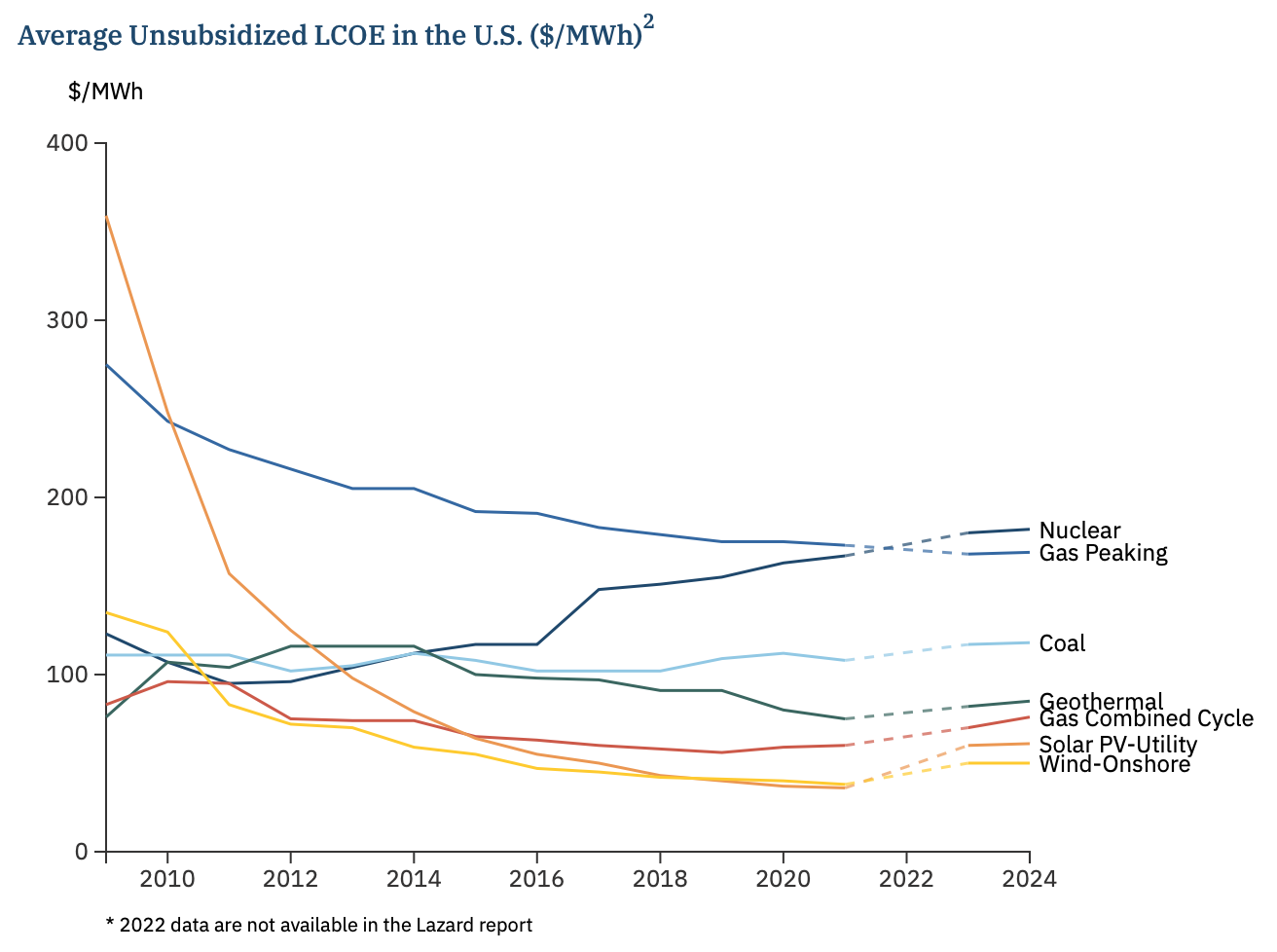
Figure 1: Comparative costs of energy sources for electricity generation over time (Ref 3)
The Power is in Our Hands
Why is the transition to zero emissions electricity so critical? The generation of electric power results in 29% of all GHG emissions in the US, and 74% of all that electricity is consumed either in residential or commercial use. (4) Clearly, the mix of energy sources that comprise the electricity we use both at work and at home will have profound consequences on our emissions. In California, given the right conditions, the state can already run on 100% wind and solar power and yet despite this, on an average day 61% is still fossil fuel generated. (5)
Transitioning to renewable low carbon electricity is important for all consumers if we are going to drive down GHG emissions and meet targets to reduce global warming below 2°C and to reduce the effects of pollution. Air pollution from the burning of fossil fuels accounts for 2.5 M deaths globally a year. (6) Many US regions are very dependent on fossil fuels as a source of electricity, with a US average of almost 60% coming from fossil fuels, see Figure 2. (7) Some regions have great dependency on fossil fuels such as 83% oil in Oahu, 98% gas in New York City, and 68% coal and gas in the Mississippi Valley, resulting in 3-4 times the GHG emissions per kWh of the lowest emitting regions. The same is true in Canada, where regions like Alberta and Saskatchewan use electricity that is primarily derived from the burning of coal and natural gas. (8) It is in these regions, especially those with high coal consumption, where transitioning to clean electricity can not only reduce GHG emissions but also lower the polluting health harms.
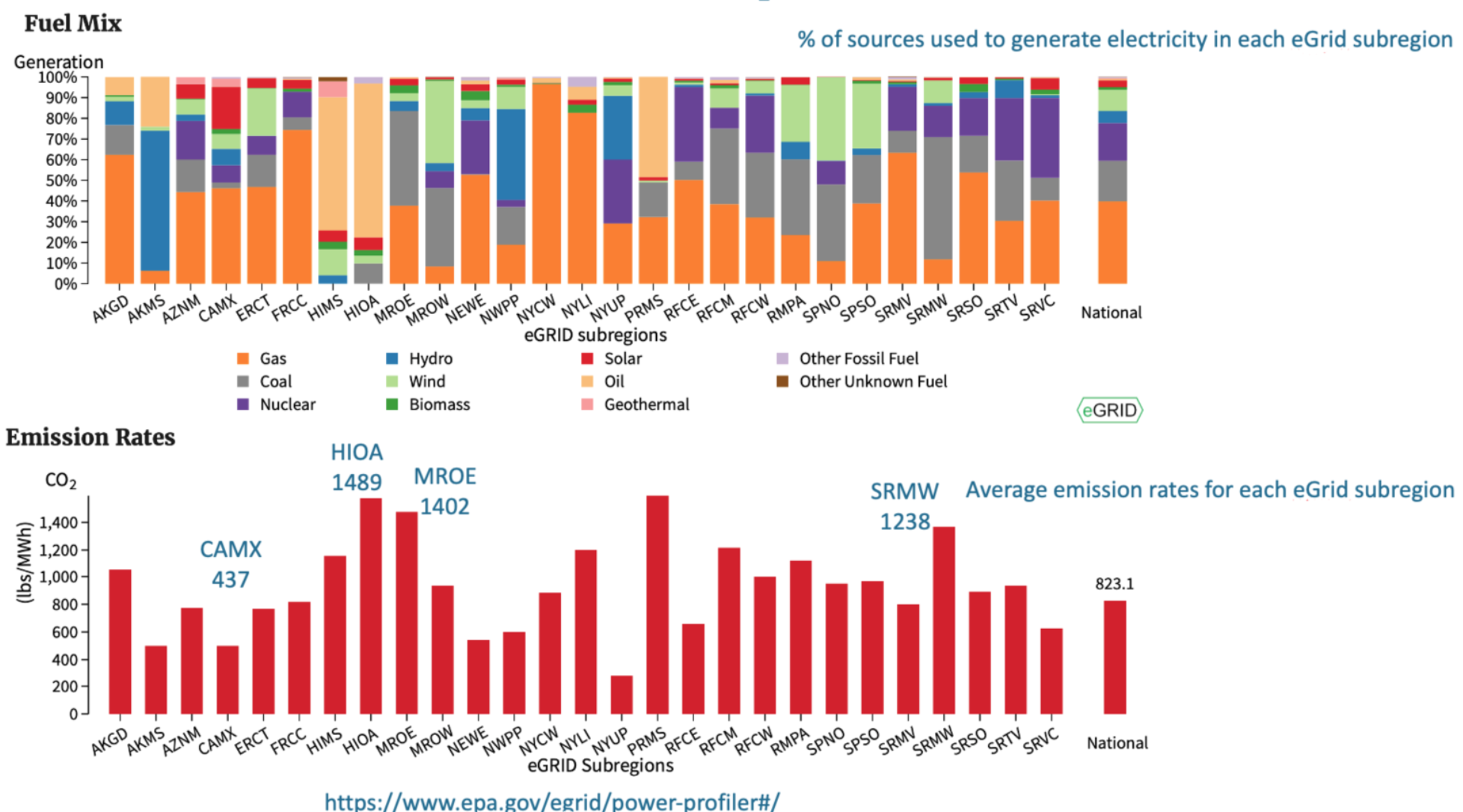
Figure 2: Power Profile eGrid comparison between US regions (Ref 7)
Combining the Effects of Electrification and Using Zero-Carbon Electricity Magnifies our Impact Reduction!
Encouragingly, when you transition to 100% renewable zero- or ultra-low electricity combined with electrifying everything in your practice or home, the carbon footprint reduction impact can be huge – up to 30% or more, and a true game changer. (9) We can all be proud to play a major part in reducing our impact.
References:
1. EPA Guide to purchasing green power.
https://www.epa.gov/sites/default/files/2016-01/documents/purchasing_guide_for_web.pdf
2. Westworth, D. How to track Greenhouse Gas Emissions in the veterinary clinic, TVP Dec 2025. https://todaysveterinarypractice.com/practice-management/us-veterinary-carbon-calculator/
3. U.S. Renewable Energy Factsheet, Center for Sustainable Systems, University of Michigan
https://css.umich.edu/publications/factsheets/energy/us-renewable-energy-factsheet
4. EPA - Electricity customers.
https://www.epa.gov/energy/electricity-customers
5. NPR- California just ran on 100% renewable energy, but fossil fuels aren’t fading away yet
6. Romanello, M et al. The 2025 report of the Lancet Countdown on health and climate change: climate change action offers a lifeline. The Lancet:406, 10521: 2804 - 2857
7. EPA Power profiler 2023 eGrid data
https://www.epa.gov/egrid/power-profiler#/
8. Canada Energy Regulator- Provincial and Territorial Energy Profile
9. Parker Z, Ashby B, Tuddenham A, Brady S, Steele K, Boyd R. Designing a net zero roadmap for healthcare. Health Care Without Harm. Updated July 2022.
