
My clinic occupies 4,000 square feet in a heritage condo building in downtown Toronto. The ceiling is nondescript: acoustic tiling and those generic light banks of 4 florescent tubes the behind an opaque plastic cover. My heating and cooling is also 100% electric. About 5 years ago, I wanted to reduce the amount of energy my clinic used, so, like some Dickensian miser, I went around and wherever I thought I could I removed 2 of the 4 fluorescent tubes. I assume it reduced our energy use (I was early in my sustainability journey and didn’t think to track it); however, even though no staff or clients complained, it certainly made things a little dreary.
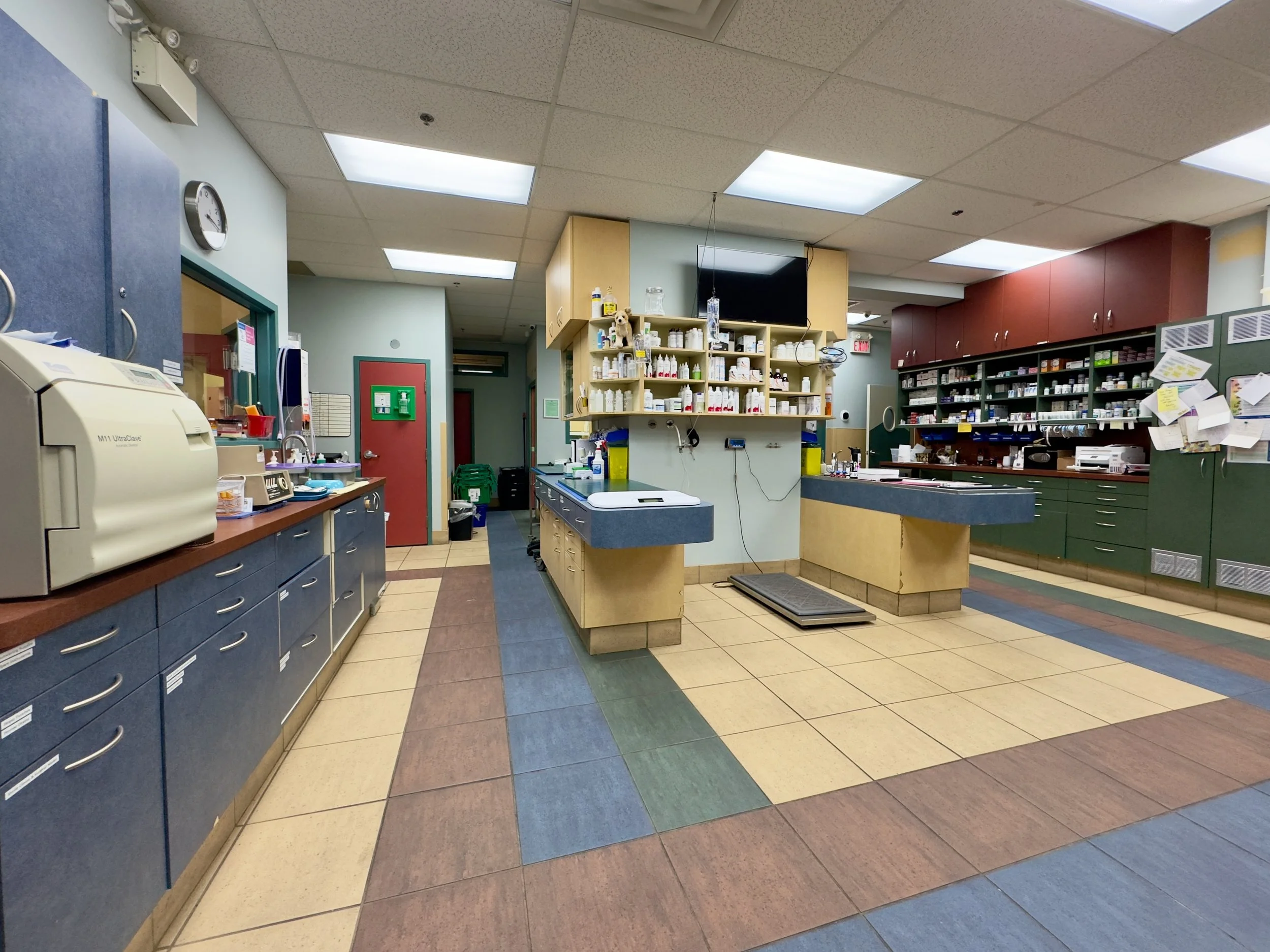
The treatment area of the clinic, highlighting the fluorescent light fixtures.
SaveOnEnergy Program
Then I got wind of Ontario Hydro’s SaveOnEnergy program. If offered small businesses an easy way to swap out all lights for LED equivalents and all thermostats for smart thermostats. There were attractive rebates available to help subsidize the costs. And perhaps the best part for a busy practice owner is that someone from the program would come and do a no cost assessment in about 1 hour. Assuming I wanted to go ahead with the upgrades, they would find and schedule the contractor, and the rebates were applied before the final bill, so I just had to pay the part not covered by the rebate.
The Estimate
The total cost of the upgrades was $5,196, $3,204 of which was covered by the program rebates, so I would be responsible for $1,992 for the upgrades. They estimated that the upgrades would save me $3,244/year, so they would pay for themselves well within the first year. In addition to that, they would return all my light fixtures to having 4 tubes per fixture, so the quality of light would improve. Better lighting at a greatly reduced price seemed music to my ears, so I signed up for the upgrades.
The Work
Within a month, a work crew showed up at the clinic and worked sequentially through the space, removing the ballasts that were needed for fluorescents, but incompatible with the LED tubes, putting in LEDs and replacing the 3 thermostats with smart thermostats. They were able to complete their work in a day, and because they moved sequentially through the clinic, they did not interfere with the delivery of medical care. They took all the old tubes and ballasts with them for appropriate disposal.
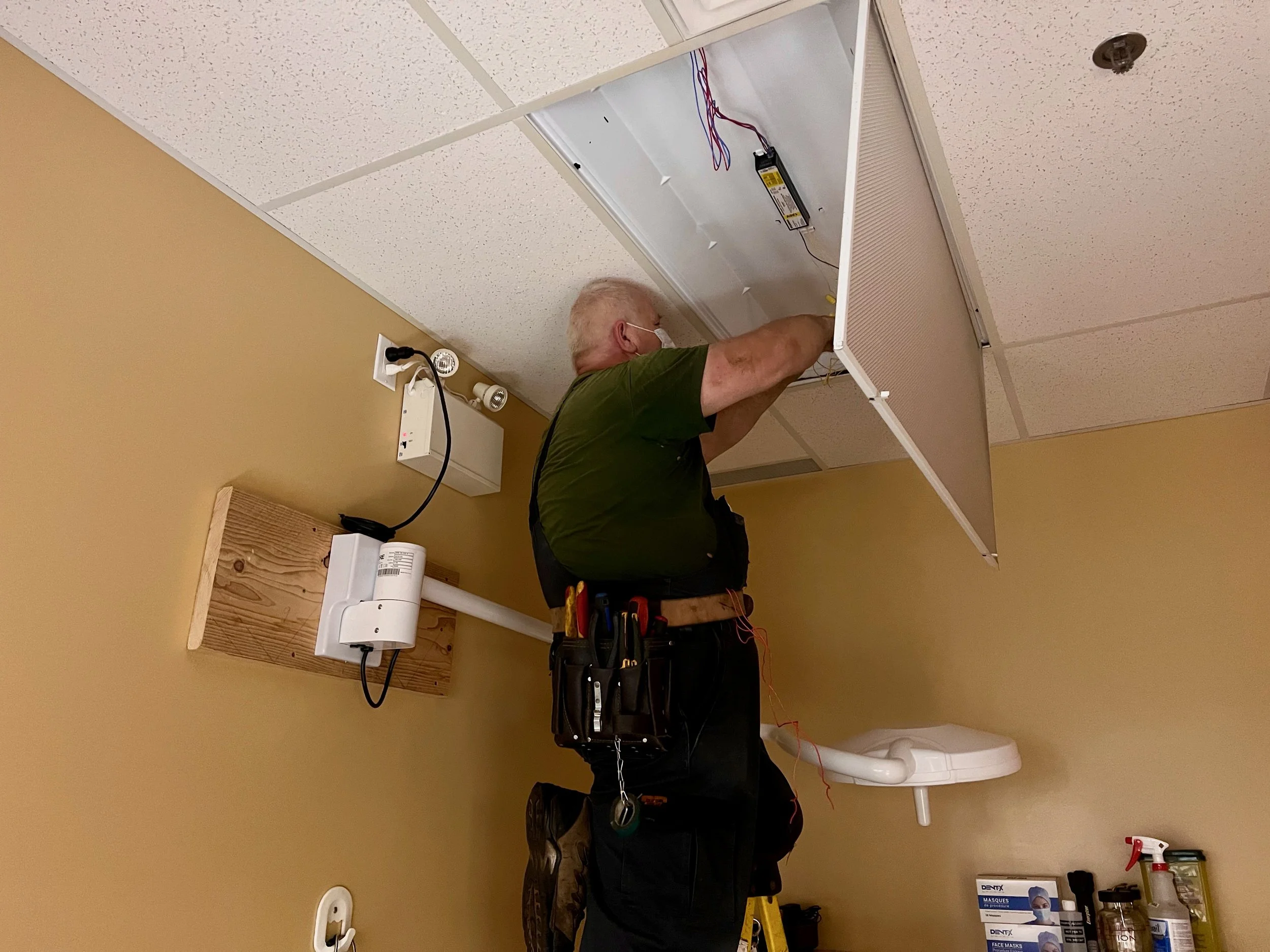
A workman removes a ballast from a ceiling flourescent light fixture.
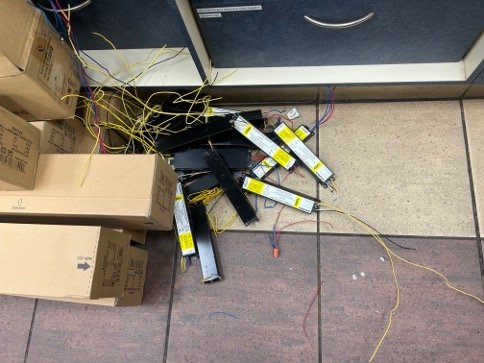
The ballasts were removed from all lighting fixtures
The Payoff
The estimate I was given suggested that the upgrades would pay for themselves in less than 8 months. I tracked my electricity use for two years after the upgrades, and compared it to the preceding 2 years. Although the estimate sounded too good to be true, it turned out be be conservative in nature. The upgrades actually saved me $4,200/year, and paid for themselves in less than 6 months! Even without the rebate, it would only have taken 15 months to pay for the upgrades.
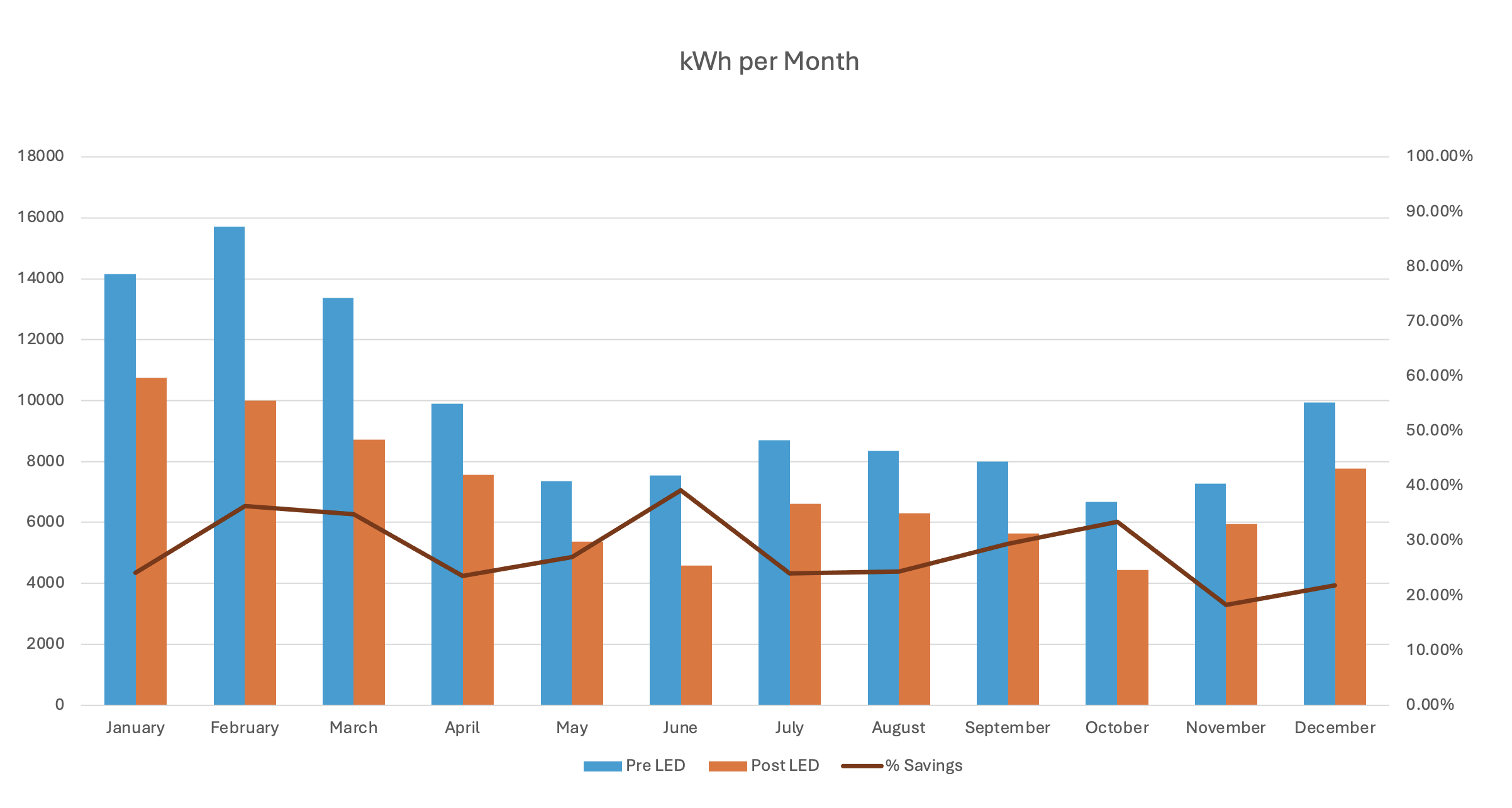
Since the heating and air-conditioning at my clinic are also electric, and they installed smart thermostats as part of the retrofit, the savings realized by the upgrade vary from month to month, but on average we reduced our electricity bill by 28% (range of 18%-40%), and saved on average $350/month. We were then able to use some of those savings to source 100% renewable energy, further reducing our clinic’s impact.
The Ultimate Win-Win
There are a lot of misconceptions about sustainability initiatives, including that they are inferior to more traditional ways of doing things, they are more expensive than traditional ways, they are all about compromise, they are difficult to do and don’t make much difference. That’s why I love to talk to people about exemplary actions that highlight the business case for sustainability, such as LED lighting. It is the ultimate Win-Win scenario. An easy upgrade. Improved lighting. Lower electricity bills. Sourcing green electricity. And STILL saving money. It’s enough to warm the cockles of any Dickensian miser’s heart!