
Shifting Landscapes: How wildfire destruction has motivated my sustainability efforts as a veterinarian.
The mountain bluebirds brought my family joy every spring when they returned to make their nests in the valley near our home. The arrival of these bright blue creatures felt like a rare and intimate communion with nature—a quiet reminder of the beauty of the environment they chose to visit. This honour ended with forest fires which scorched much of the valley, shifting the lush, forested landscape we knew into ash and blackened trees. Thanks to the efforts of wildland firefighters, many structures were saved and the spread slowed, and for that I’m grateful. Yet I continue to mourn the loss of the great nesting habitat and the many wild animals I have yet to see return.
As a veterinarian who spends every day protecting and caring for animals, losing the wildlife I hold dear has been a sorrowful experience. With large areas of the forest razed to the ground, local communities of people and animals await regrowth in a decades-long test of patience and resilience. This lived experience of wildfire and climate-related loss is the reality of climate change.
Many of you share this firsthand experience with climate change directly affecting daily life. Whether it was atmospheric river flooding, heat domes resulting in massive aquatic species loss, the decimation of towns by wildfire, or any of the multitude of other extreme weather events, you may feel the loss alongside me. I regularly wonder what our home will be like for my children and grandchildren and what will happen to the wildlife and natural habitats we treasure. The decline of stable ecosystems stemming from the burning of fossil fuels and associated heating of the earth’s atmosphere, has long been predicted by climate scientists and observed by Indigenous knowledge holders. That thought, alongside the overnight status of my latest splenectomy patient, keeps me up at night.
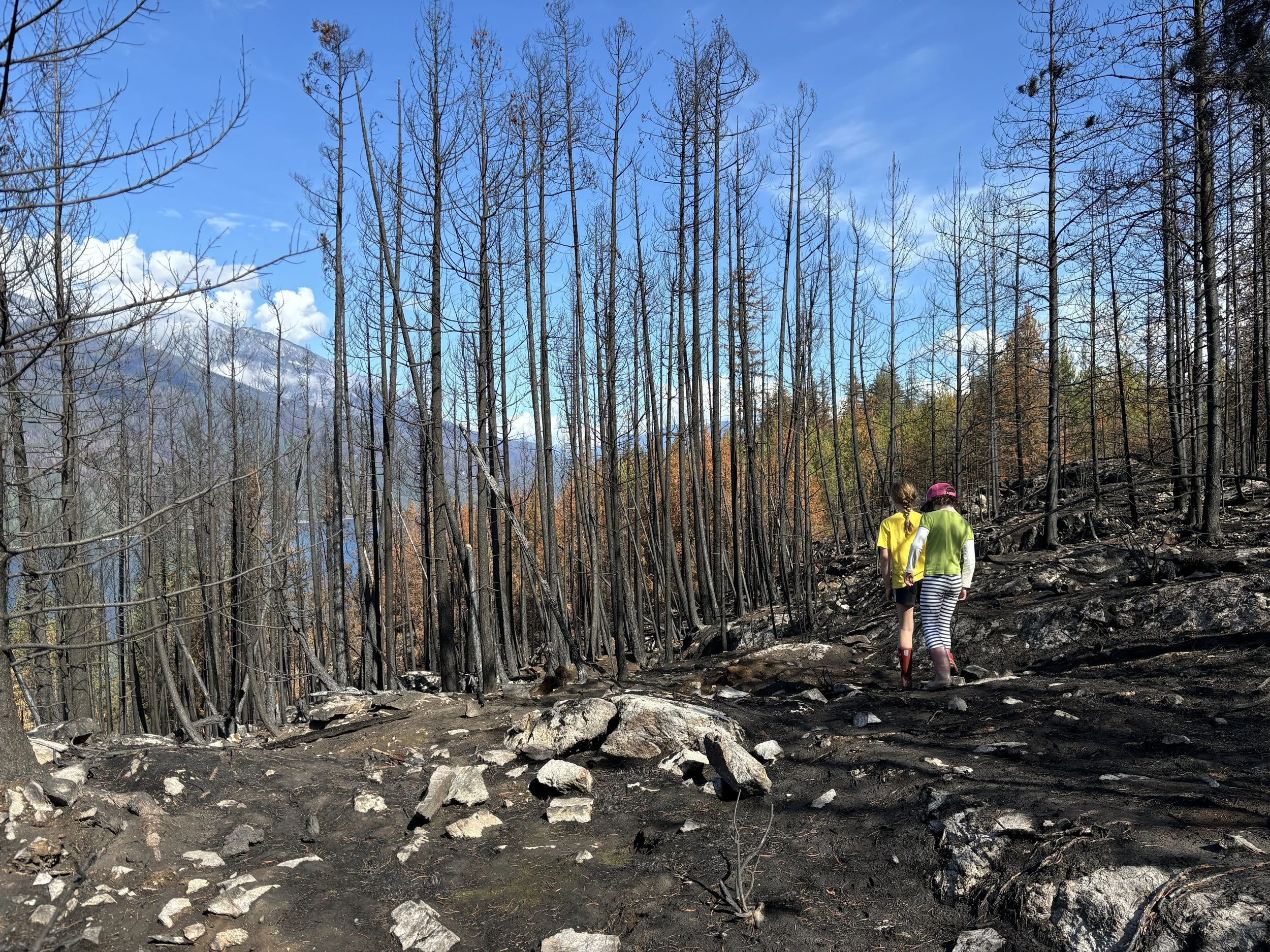
The next generation explores their changed home
However, my climate anxiety motivates me to make positive change, and I truly believe that as a veterinarian I can be part of a solution that slows carbon emissions, plastic pollution, and habitat destruction. I see veterinarians as a key part of this positive and, frankly, exciting effort to minimize the extent of climatic heating and environmental degradation. Veterinary teams are action-oriented and committed to leaving a positive legacy. Together, we can envision a future where wildlife thrives in natural habitats, where the air is clean to breathe, and where fresh water still invites a summer cannonball. Green changes will also save your practice money, help with staff retention, and be good for your patients and the earth.
Like many early- to mid-career veterinarians, I work for a corporate group. When I came to them years ago and asked to create a sustainability plan, I was given a license to recommend changes that would make our practice both more environmentally responsible and more financially efficient to operate. It sounds simple, but challenging people to change habits can be shockingly difficult. Change from status quo is hard at all levels of practice—from kennel staff to management. For corporate and management teams, financial savings can be an effective incentive, and when paired correctly, cost savings and carbon reductions align well. Through trial and error, in my effort to support the cleanest, greenest practice possible, I discovered a key ingredient for success: a willing team to lead the change. Like slowing climate change, this work can’t be done alone.
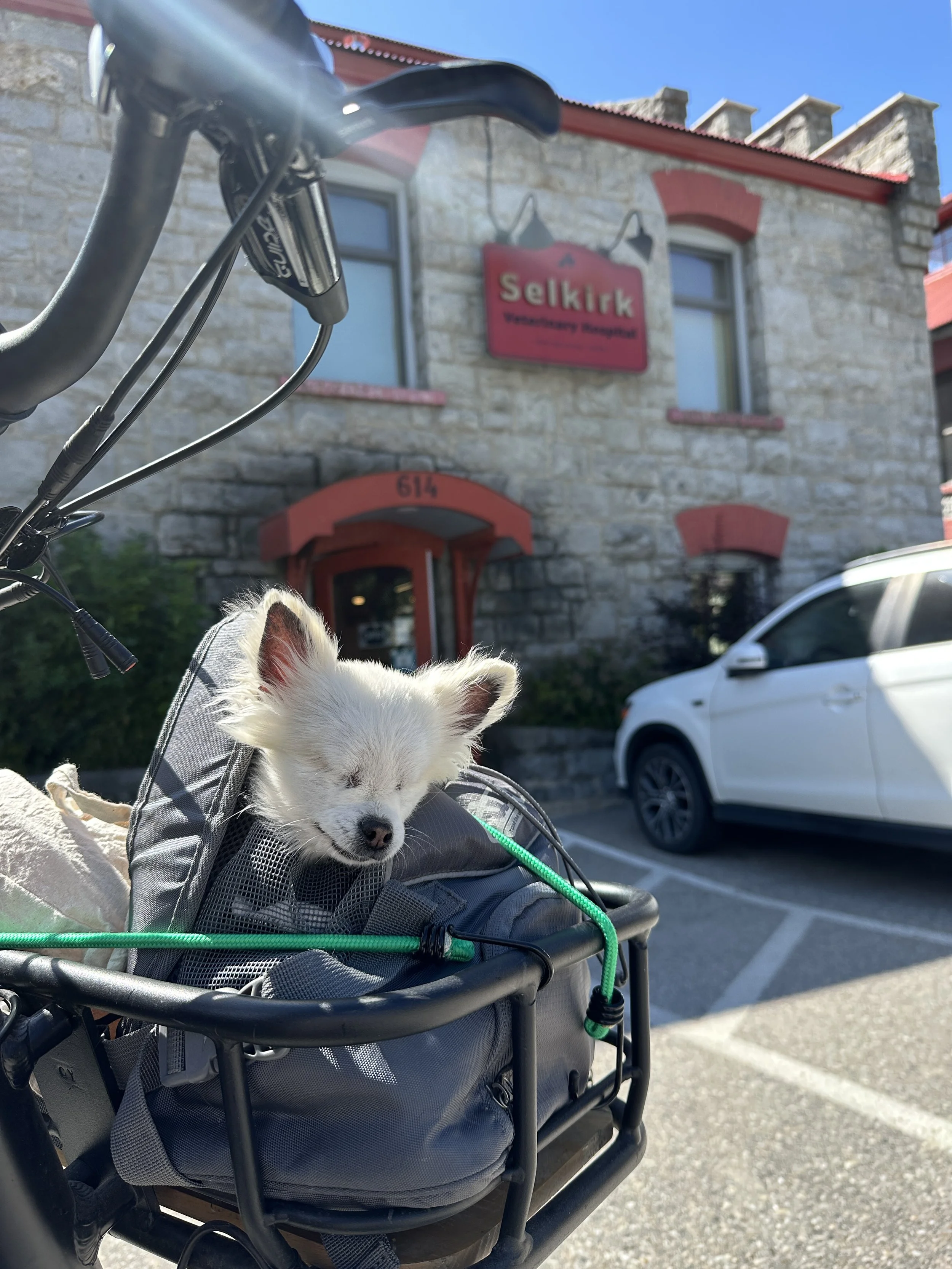
The author commutes with her small blind dog on an e-bike all year.
On my journey of environmental advocacy in veterinary medicine, I came across the CVMA’s “Green Practice” document. Already a decade old by the time I discovered it, I was nevertheless impressed and inspired. The document’s menu of “go green” options were very helpful. Since the creation of that resource there has thankfully been a small explosion of organizations supporting veterinary practices in making environmentally responsible changes (see Appendix). Furthermore, the CVMA has made environmental sustainability initiatives a priority for 2025, a critical step toward ensuring veterinarians are societal leaders at this time of climate crisis. As an aspiring “green” veterinarian, I’ve found partnership with as a CVMA Sustainability Advisory group member and more recently as a Director with the Veterinary Sustainability Alliance (VSA)—a cross-border team of Canadian and American experts advancing effective climate solutions for veterinarians. I’m inspired to keep supporting this work and to continue finding ways to help veterinarians be leaders in this area.
For those thinking about being part of this change, a helpful guide for veterinary teams is the “Pathway to a More Sustainable Clinic” https://www.veterinarysustainabilityalliance.org/pathway-to-a-more-sustainable-clinic. Created by the VSA for the CVMA and AVMA, the Pathway offers a practical entry point for any practice to envision its greener future. The model is simple, effective, and applicable to any type of practice, be it corporate or private, small or large animal, mobile or a referral specialty. It also allows for creativity, originality, and leadership—all skills veterinary teams inherently excel at.
The Pathway’s three main steps:
Core: Create your team and design your unique plan for action.
Clinic: Create green change that will work in your practice.
Community: Share what you’re doing with others—your clients and team members will love it!
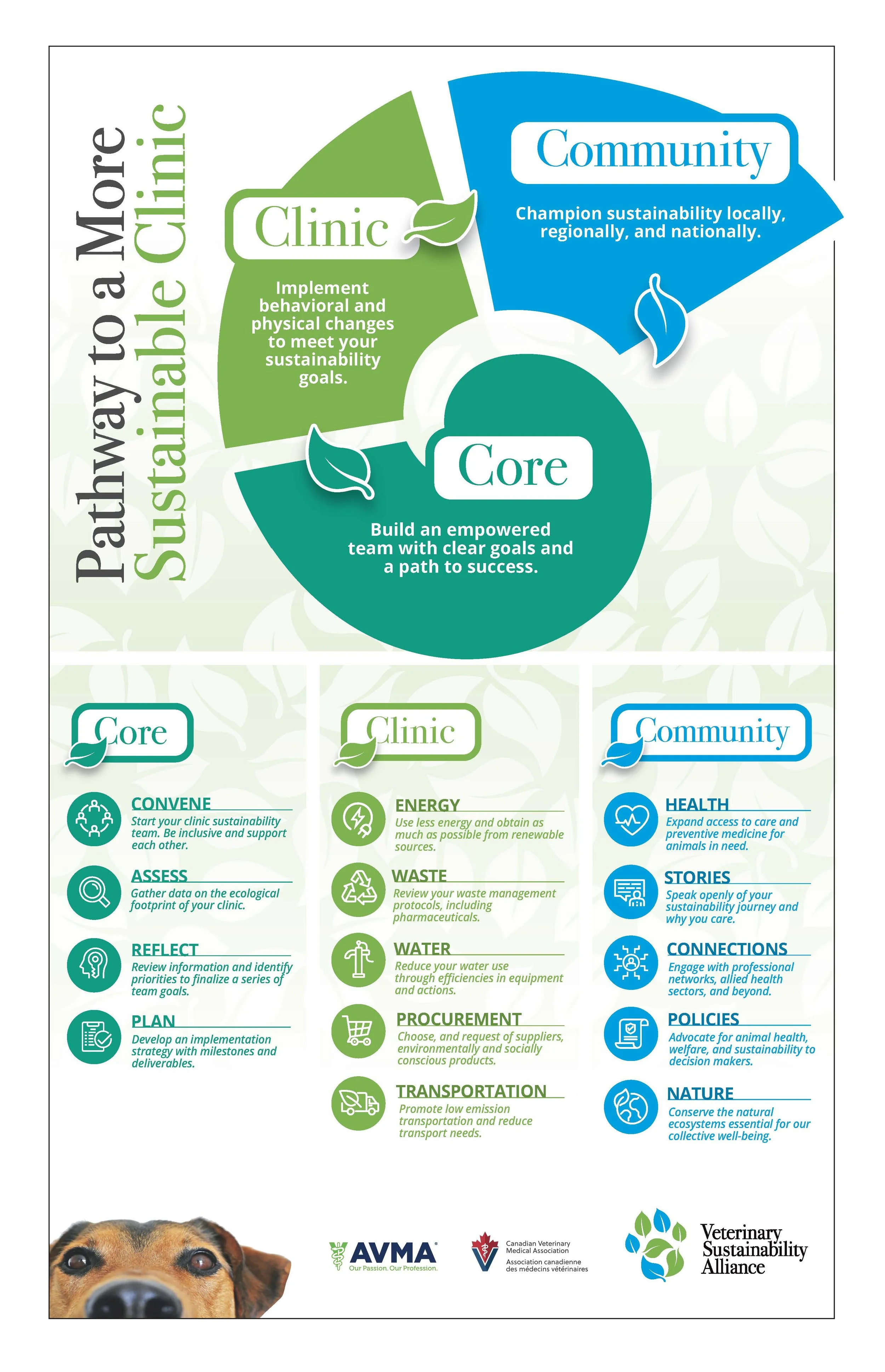
A great resource for clinics to follow on their journey to go green.
I’m also pleased to be a part of the Green Paw Certification Program created by the VSA—an evidence-based certification program that provides the resources and checklist you need to go green. Now you can receive public acknowledgement for your environmental improvements and capacity for change. Changing how we practice day to day is a challenge, but other certification programs, such as American Animal Hospital Association accreditation and Fear Free certifications, have made a significant impact in veterinary medicine in North America. Similar to those programs, Green Paw is based on peer-reviewed science and offers impactful solutions.
Become Green Paw Certified!
The actions of individual veterinarians have impact beyond the carbon reductions and money saved—your leadership in sustainability will make ripples within the profession.
From a practical standpoint, here are some of my favourite changes you can implement at your practice, which save both money and resources:
Go reusable: Reusable gowns, caps, drapes, wraps for packs, and other such items last longer and can be safely sterilized to maintain impeccable hygienic standards. Your garbage and plastic output will drop dramatically, and the cost of washing them is well worth it.
Turn down your anaesthetic gas—or better yet, turn it off:With effective sedation, pain control, good local blocks, and an efficient surgeon, very little inhalant gas is often needed. Inhalant anaesthetic gases, such as isoflurane and nitrous oxide, have a global warming potential (potency as an agent of climate change) hundreds of times higher than that of carbon dioxide.
Make building changes: Switch to LED lights, heat pumps, low-flow taps, and even hand dryers. Buildings are responsible for a large amount of carbon emissions. While we’re lucky in BC to rely primarily on hydro power, reducing energy use still lowers carbon output and saves on operational costs in the long term. There are also many subsidy programs out there—check with your power supplier for information.
Reconsider your purchasing decisions: Make environmentally friendly choices when you purchase products, such as choosing peroxide-based cleaning products and eco soaps, and avoid excessive bleach and chlorhexidine use. Ask your supplier to send reusable bins with each order and reduce deliveries whenever possible.
Imagine this great sticker on your vet clinic front door symbolizing your hard work for the planet.
It would be easy for me to stop pushing green practice initiatives and resign myself to enjoying more bike rides in my free time, but I desperately want to be part of the solution. The precious mountain bluebird may not return to nest near us for some time, and I hope it finds another intact forest habitat in the meantime, but while I was preparing this article, I heard the call of a nighthawk for the first time since the fire. It was building its nest on the rocky slopes and enjoying the smorgasbord of insects from the burnt trees. Hearing this bird brought me both joy and resolve. Like the creatures we love, we also can be resilient—we can make the most of the future we have before us, whatever may come.
This article originally appeared in West Coast Veterinarian, the magazine of the Society of BC Veterinarians. It is reproduced here with their permission and some minor edits.