
Electrify Everything
ELECTRIFYING EVERYTHING in your hospital is the fast-track path to sustainable energy use.
The HVAC
The water heater
All other appliances
Your Ride
EVERYTHING! (1)
What powers your appliances matters!
As consumers, we are constantly inundated with choice. This includes how we choose to power the appliances in our businesses and homes. Other than electricity, common sources of energy include gas (or oil) for space heating, water heaters, clothes dryers, stove tops, ovens, back-up generators, and vehicles. Replacement of these direct fossil fuel consuming appliances and vehicles with efficient electrical appliances will massively reduce your carbon footprint. (2) This can also offer an improvement in user experience, including reduced indoor pollution from gas appliances and associated asthma, risk of carbon monoxide exposure, and other health harms, (3) although may be less impactful than previously thought. (4) Additionally, when you also source electricity from 100% renewable zero-carbon sources you get the added benefit of zero emissions electricity use.
Hospitals are huge consumers of energy
Human hospitals are some of the most energy-intensive commercial buildings. According to a US study, hospitals use more than double the amount of energy, measured per square foot, than comparably sized commercial building. (5) In the chart below, Figure 1, you can see that the appliances with the largest consumption of energy are those used for heating or cooling buildings, ventilation, and heating water- all told accounting for more than 60% of all energy use in the average US human hospital. Electrifying these heating appliances, as well as reducing general energy consumption and improving efficiency will make a substantial impact. There are no such figures for veterinary clinics currently, but it is reasonable to assume that the same trends will be seen in veterinary medicine.
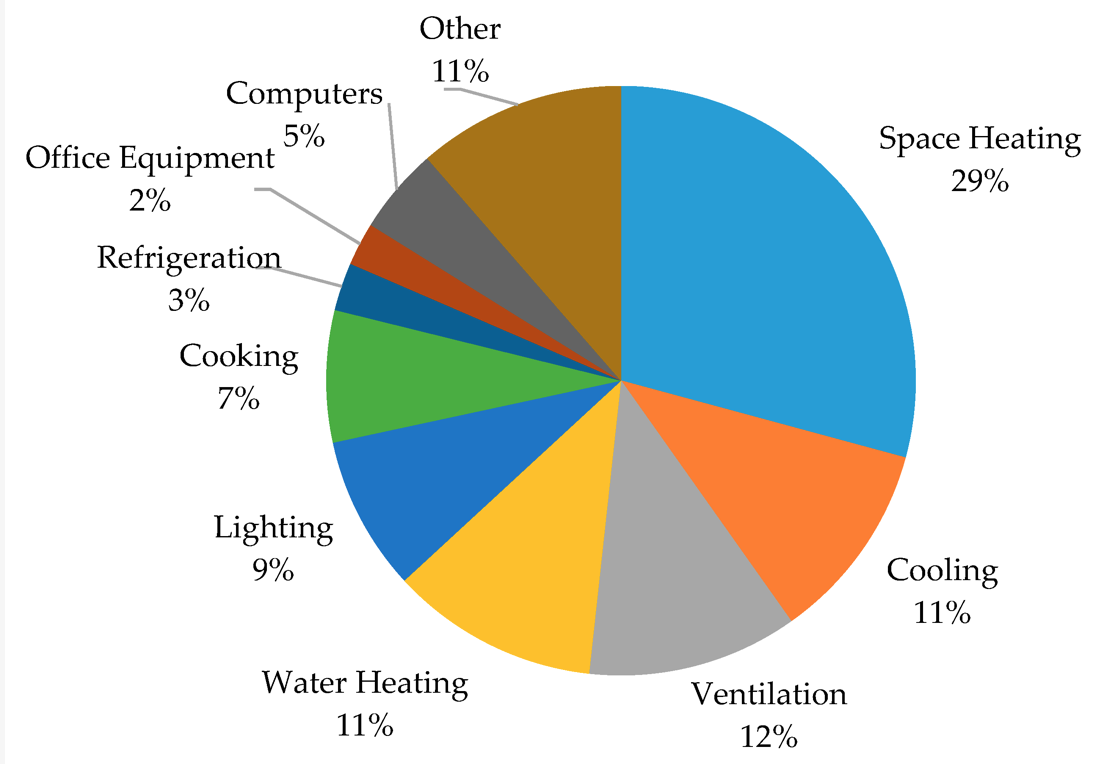
Figure 1: Breakdown % of most common hospital energy end use (5)
Understanding your energy use is key to reducing impacts
The lack of understanding of our energy consumption trends leaves a large void in our ability to become more efficient, save money, and reduce our emissions. (6) Performing a calculation using the US veterinary specific greenhouse gas calculator (VCALC) of at least these Scope 1 and 2 emissions can really help identify these readily reducible emissions (a Canadian calculator will also be available soon). (7) The inputs are based on simple energy use from your aggregated annual utility use and are readily available.
Electrifying everything is easy!
Electrifying everything in your practice has just gotten much easier. There are now many local, regional, and nationwide companies within the US specializing in improving home and business energy efficiency and in installing the most appropriate electric appliance upgrades as indicated based on holistic building assessments.
When upgrading your appliances, electrical panel, and wiring system, upgrades may be required to accommodate the increased electrical demand. The Inflation Reduction Act (IRA) and sources such as Rewiring America (8) provide ready access to rebates and tax incentives for these changes. Unfortunately, at the time of writing, most of these incentives are set to expire shortly.
Which appliances should I replace first?
Replacements of appliances to consider when electrifying your practice in order of greatest impact are: (9)
Electric vehicle
HVAC - heat pump
Water heater - heat pump
Electric oven and/or electric induction stove top
Clothes dryer – heat pump
Replacement can be done all at once, piecemeal, or even on an as needed basis when the current appliance fails. Even if you are not ready today, we highly recommend you start putting in place an appliance replacement business plan now. Identifying installers and the desired efficient electrical appliance ahead of time will facilitate timely replacement. Ask for an interim rental replacement if needed as many quality providers/installers now provide these. Importantly, when you do replace, consider quality of manufacturing/build, efficiency, reliability, and the effective lifetime use of the machine.
Installation of a PV solar array on the roof - or even better on carpark shade structures- battery storage, and electric vehicle chargers will further facilitate your ability to manage electrical power and use at the practice, create resilience and power independence from the grid, and potentially cheaper utility rates which are increasingly available for EV charging centers in the midday hours when veterinary clinics generally consume the most electricity. After all, what more impressive statement regarding your commitment to lowering your emissions can you make to your clients?
And all these recommendations apply equally to your home. In fact, it is even easier to do at the smaller scale of a home. Once you are convinced, pass the message on to your neighbors and practice. In fact, the “Neighbor Effect” for highly visual statements like a PV solar array may account for an increase in adoption rates of 16% or more. (10)
Make your next major sustainability goal be to electrify everything- or at least one gas appliance in your practice!
References:
1. City of Portland – Electrify everything logo
https://portland.civilspace.io/en/projects/city-of-portland-electrify-everything
2. Griffiths, S. Electrify: An optimist’s playbook for our clean energy future. MIT Press. 2021.
3. Gruenwald, T., et al. Population Attributable Fraction of Gas Stoves and Childhood Asthma in the United States. Int. J. Environ. Res. Public Health 2023, 20, 75.
4. Puzzolo, Elisa et al., Estimated health effects from domestic use of gaseous fuels for cooking and heating in high-income, middle-income, and low-income countries: a systematic review and meta-analyses. The Lancet Respiratory Medicine; 12,4: 281 - 293
5. Bawaneh, K.; Ghazi Nezami, F.; Rasheduzzaman, M.; Deken, B. Energy Consumption Analysis and Characterization of Healthcare Facilities in the United States. Energies 2019, 12, 37756.
6. The Burns Group- submetering tools more efficiently diagnose hospital energy conditions.
https://www.burns-group.com/submetering-tools-more-efficiently-diagnose-hospital-energy-conditions/
7. Westworth DR. How to track greenhouse gas emissions in the veterinary clinic. TVP. 2024.
https://todaysveterinarypractice.com/practice-management/us-veterinary-carbon-calculator/
8. Rewiring America- IRA calculator
https://www.rewiringamerica.org/app/ira-calculator
9. Griffiths, S. Plug in! The electrification handbook. Black Inc. 2025.
10. Irwin, N. Sunny days: Spatial spillovers in photovoltaic system adoptions. Energy Policy 2021; 151, 112192
